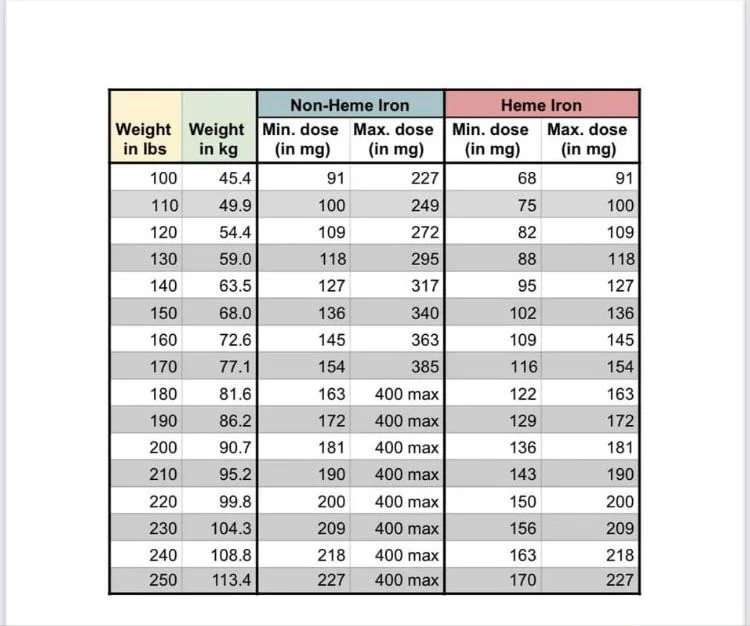
Iron Dosing by Weight
- The physiological and pathophysiological roles of copper in the nervous system et al. Review Article
- ?
- Remyelination in Multiple Sclerosis: Findings in the Cuprizone Model et al. Article
- "Cuprizone, chemically known as bis-(cyclohexanone) oxaldehydrozone, is a synthetic chelating compound initially used to detect trace copper [44,45]. This compound became of interest in biomedical research when it was discovered to exert toxic effects in the CNS of laboratory mice [46]."
- "The intoxication of young adult mice with cuprizone, mixed into standard rodent chow in a concentration of 0.2–0.5% (w/w), induces, within some days, oligodendrocyte stress, leading to oligodendrocyte degeneration [47]. This presumably primary oligodendrocyte insult leads to the activation of astrocytes and microglia, the latter phagocytosing the degenerating myelin sheaths. This results in the acute demyelination of distinct white and gray matter brain regions [48]."
- "Since cuprizone chelates copper and copper is an essential trace element for a number of metalloenzymes involved in cellular respiration, it is widely presumed that CNS damage due to the cuprizone intoxication is a result of copper dyshomeostasis and, in consequence, mitochondrial dysfunction. In contrast to this theory, results of a recent study suggest that cuprizone’s toxicity is not due to copper depletion but instead due to a gain of toxicity induced by an unusual cuprizone:copper complex [44]."
- "Whatever the precise underlying mechanism of the cuprizone-induced toxicity is, it triggers a highly reproducible demyelination of distinct white and gray matter regions. Of note, although demyelination is widespread, it occurs in a region-specific manner."